Chinese General Practice ›› 2026, Vol. 29 ›› Issue (26): 3739-3744.DOI: 10.12114/j.issn.1007-9572.2026.0001

• Special Topic: Clinical Features in General Practice • Previous Articles     Next Articles

Analysis of Disease Characteristics of Inpatients in the Department of General Practice at a Tertiary General Hospital in Beijing


  1. 1. Capital Medical University, Beijing 100050, China
    2. Department of General Practice, Fuxing Hospital of Capital Medical University, Beijing 100045, China
    3. Yuetan Community Health Center, Fuxing Hospital of Capital Medical University, Beijing 100045, China
  • Received:2026-01-06 Revised:2026-04-11 Published:2026-09-15 Online:2026-08-11
  • Contact: WANG Jieping

北京市某三级综合医院全科医学科住院患者疾病特征研究


  1. 1.100050 北京市,首都医科大学
    2.100045 北京市,首都医科大学附属复兴医院全科医学科
    3.100045 北京市,首都医科大学附属复兴医院月坛社区卫生服务中心
  • 通讯作者: 王杰萍
  • 作者简介:

    作者贡献:

    赵泽宙负责数据收集与整理、统计学处理、图表绘制及论文撰写;王杰萍负责研究构思与设计;杜雪平、闫巍进行监督管理;吴薇、李倩负责文章质量控制与审阅;赵亚文、李昊东完成论文修订。

  • 基金资助:
    首都卫生发展全科医学与社区卫生科研专项(2023-2Y-013)

Abstract:

Background

On August 27, 2018, the National Health Commission Office issued the "Notice on Issuing the Guiding Standards for the Establishment of General Practice Departments in Standardized Resident Training Bases (General Hospitals) (Trial) ", which stipulated that all general hospitals undertaking standardized resident training should independently establish a General Practice Department. Against this backdrop, the role and functional positioning of the General Practice Department become particularly important.

Objective

To explore the role and functional positioning of the General Practice Department in tertiary general hospitals by analyzing the disease characteristics of inpatients in the General Practice Department of a tertiary general hospital in Beijing.

Methods

Inpatients treated in the Department of General Practice, Fuxing Hospital of Capital Medical University, between 2021 and 2022 were selected as the study subjects. Basic patient demographics and clinical information were collected and retrospectively analysed, including gender, age, marital status, occupation, admission route, number of visits, admission diagnosis, discharge diagnosis, consultation details and clinical outcomes, and the prevalence of comorbidities was calculated.

Results

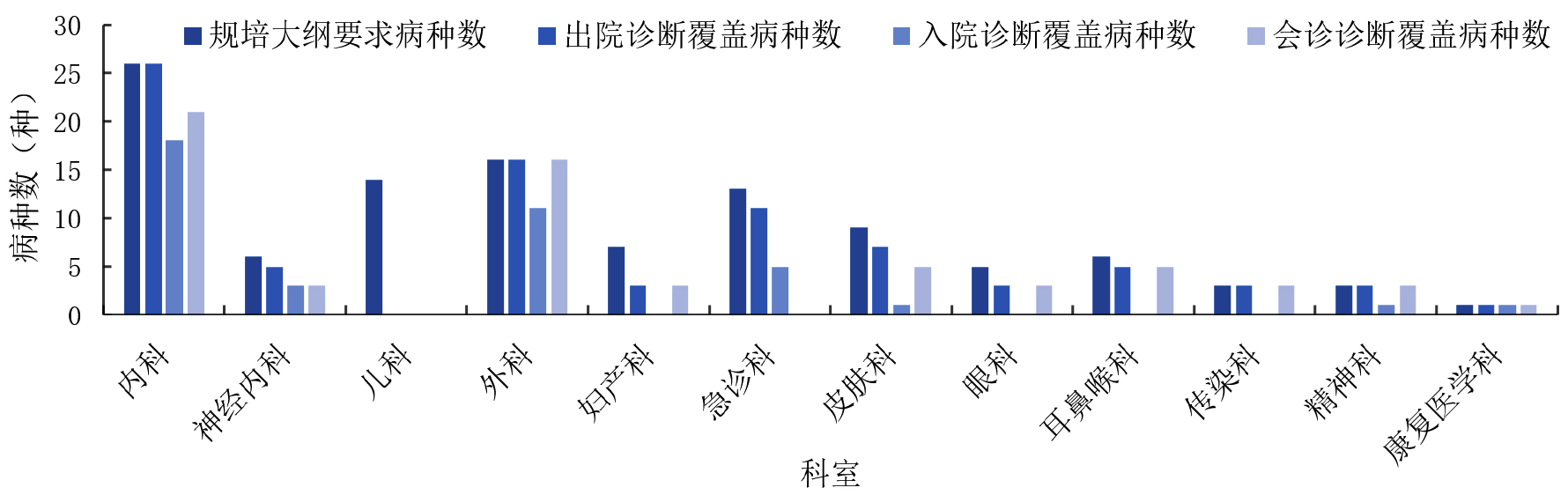
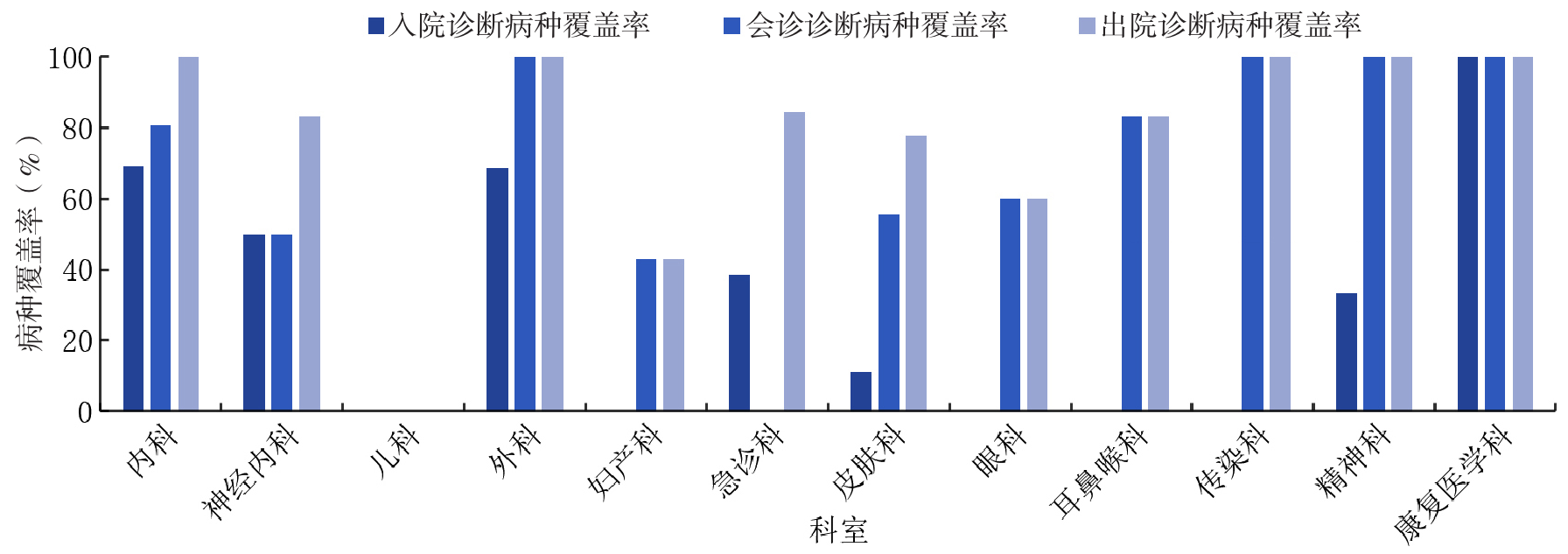
A total of 1 441 patient visits were surveyed, comprising 702 male patients (48.70%) and 739 female patients (51.20%); ages ranged from 17 to 102 years, with a mean age of (79.5±13.6) years; 519 (36.01%) patient visits were for patients who had been hospitalised two or more times; 890 (61.76%) patient visits were for outpatients admitted to hospital, 489 (33.93%) were for emergency admissions, and 62 (4.30%) were referred from primary care facilities; 1 343 (93.20%) patients were discharged on medical advice. The top three admission diagnoses were pulmonary infection (197 cases, 13.67%), dizziness (167 cases, 11.59%) and cerebral infarction (150 cases, 10.41%); the top three primary diagnoses at discharge were pulmonary infection (343 cases, 23.80%), cerebral infarction (258 cases, 17.90%) and urinary tract infection (65 cases, 4.51%). The most common pattern of two chronic diseases was hypertension and hyperlipidaemia [806 cases (55.93%)], whilst the most common pattern of three chronic diseases was hyperlipidaemia, hypertension and cerebral infarction [584 cases (40.53%)]. Among the 1 441 patients, admission diagnoses covered 40 conditions within the general practice training curriculum, totalling 550 diagnoses; consultation diagnoses covered 63 conditions, totalling 1 137 diagnoses; and discharge diagnoses covered 83 conditions, totalling 12 328 diagnoses. Among admission diagnoses, conditions in internal medicine, surgery and rehabilitation medicine had a high coverage rate (>60%); among consultation diagnoses, conditions in surgery, infectious diseases, psychiatry and rehabilitation medicine achieved 100% coverage; and among discharge diagnoses, conditions in internal medicine, surgery, infectious diseases, psychiatry and rehabilitation medicine achieved 100% coverage.

Conclusion

In the daily clinical practice of general practice departments at tertiary general hospitals, chronic diseases, geriatric comorbidities and undiagnosed conditions predominate. These departments play a vital role in the comprehensive management of common diseases, provide an excellent teaching platform for the standardised training of general practitioners, establish a fast-track mechanism for collaboration between primary care and tertiary hospitals, and lay a solid foundation and provide safeguards for advancing clinical research in general practice.

Key words: General practice department, Comprehensive hospital, Inpatients, Disease ranking, Beijing

摘要:

背景

2018-08-27,国卫办科教发《关于印发住院医师规范化培训基地(综合医院)全科医学科设置指导标准(试行)的通知》中提出,承担住院医师规范化培训的综合医院均应独立设置全科医学科。在此背景下,全科医学科的角色和功能定位显得尤为重要。

目的

通过分析北京市某三级综合医院全科医学科住院患者疾病特征,探索全科医学科在三级综合医院中的角色和功能定位。

方法

选取首都医科大学附属复兴医院全科医学科2021—2022年住院患者为研究对象,收集并回顾性分析患者的基本情况和疾病信息,包括患者的性别、年龄、婚姻、职业、入院途径、就诊例次、入院诊断、出院诊断、会诊情况及转归情况等,并统计患者的共病情况。

结果

最终纳入1 441例次患者,其中男702例次(48.70%),女739例次(51.20%);年龄17~102岁,平均年龄(79.5±13.6)岁;2次及以上住院患者519例次(36.01%);门诊入院890例次(61.76%),急诊入院489例次(33.93%),基层医疗机构转入62例次(4.30%);医嘱离院1 343例次(93.20%)。入院诊断排在前3位的分别为肺部感染197例次(13.67%)、头晕167例次(11.59%)和脑梗死150例次(10.41%),出院主要诊断排在前3位的分别为肺部感染343例次(23.80%)、脑梗死258例次(17.90%)和泌尿系统感染65例次(4.51%)。2种慢性病共病模式最常见的是高血压+高脂血症[806例次(55.93%)],3种慢性病共病模式最常见的是高脂血症+高血压+脑梗死[584例次(40.53%)]。1 441例次患者中,入院诊断涉及全科规培病种40种,共计550个诊断,会诊诊断涉及全科规培病种63种,共计1 137个诊断,出院诊断涉及全科规培病种83种,共计12 328个诊断。入院诊断中,内科、外科及康复医学科病种覆盖率较高(>60%);会诊诊断中,外科、传染科、精神科和康复医学科病种覆盖率达到100%;出院诊断中,内科、外科、传染科、精神科和康复医学科病种覆盖率达到100%。

结论

三级综合医院全科医学科日常诊疗中以慢性病、老年共病、待查疾病为主,在常见病综合诊治方面发挥了重要作用,为全科医生规范化培训提供了良好的教学平台,为基层与上级医院联动建立了绿色通道,也为提升全科医学临床研究奠定了坚实的基础并提供了保障。

关键词: 全科医学科, 综合医院, 住院患者, 疾病顺位, 北京市